
Autumn is the time to spot problems. Winter is the time to avoid them.
A drain that flows a little more slowly than usual, a drain that isn’t clearing water as well as it used to, or problems that keep recurring, may be signs that the pipework needs attention.
Before winter sets in, it may therefore be a good idea to take a closer look at the drainage system – whether in private homes, housing cooperatives, commercial premises or public buildings.
Minor signs can be easy to overlook. However, if the cause is identified early on, it is often possible to take action before the problem comes to a complete standstill.
1. Look out for changes in the drainage
You don’t need to be an expert to realise that something has changed.
Typical signs may include:
- the water is draining away more slowly than before
- There’s a gurgling sound coming from the sink, toilet or drain
- you notice a recurring odour coming from the drain
- the same sink or drain becomes blocked several times
- water comes up through another drain when the system is under load
- External drains or sewers are draining water less effectively than usual
A single blocked sink may be caused by a local blockage. If the problems recur, or if several parts of the drainage system are affected at the same time, the cause may lie further inside the pipes.
In that case, it might be wise to look into the matter further before the problem gets any worse.
2. Autumn means more water, leaves and strain
Here in Western Norway, we hardly need reminding that autumn can be wet.
Heavy rainfall, leaves, soil, sand and other debris can affect external drains, gullies and surface runoff. If the system’s capacity is already reduced, periods of heavy rainfall can make the problem more apparent.
It is therefore a good idea to check that external drains and grates are clear, and that the water is actually flowing where it should.
For larger properties, commercial buildings and communal facilities, manholes, sand traps and drainage networks may also need to be inspected or emptied.
3. Don’t wait until the pipe is completely blocked
Drainage problems often develop over time.
Grease, soap scum, sludge and other deposits can gradually build up on the inside of the pipes and reduce their capacity. At first, you may simply notice that the water is running a little more slowly. Over time, the problem can develop into a blockage or backflow.
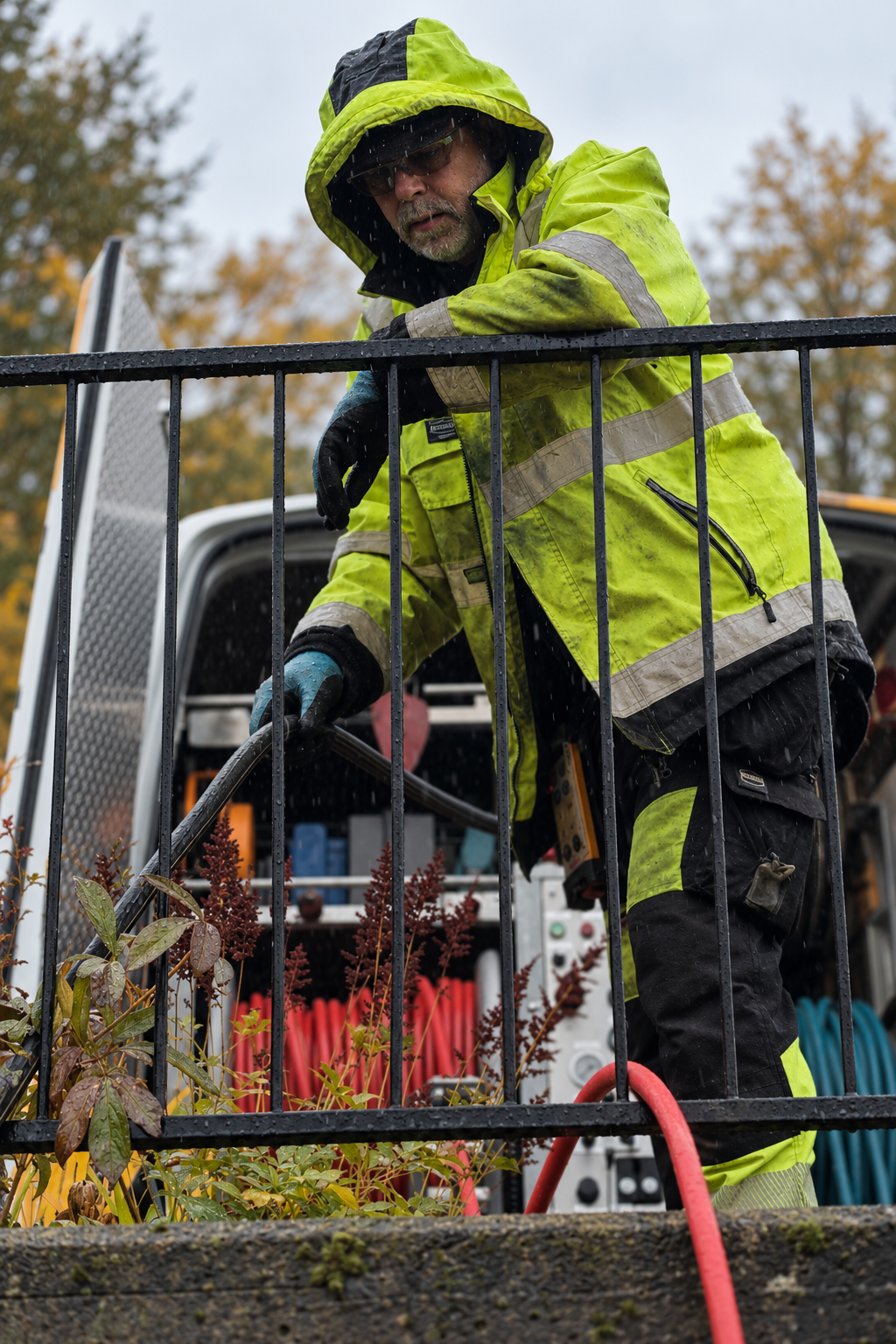
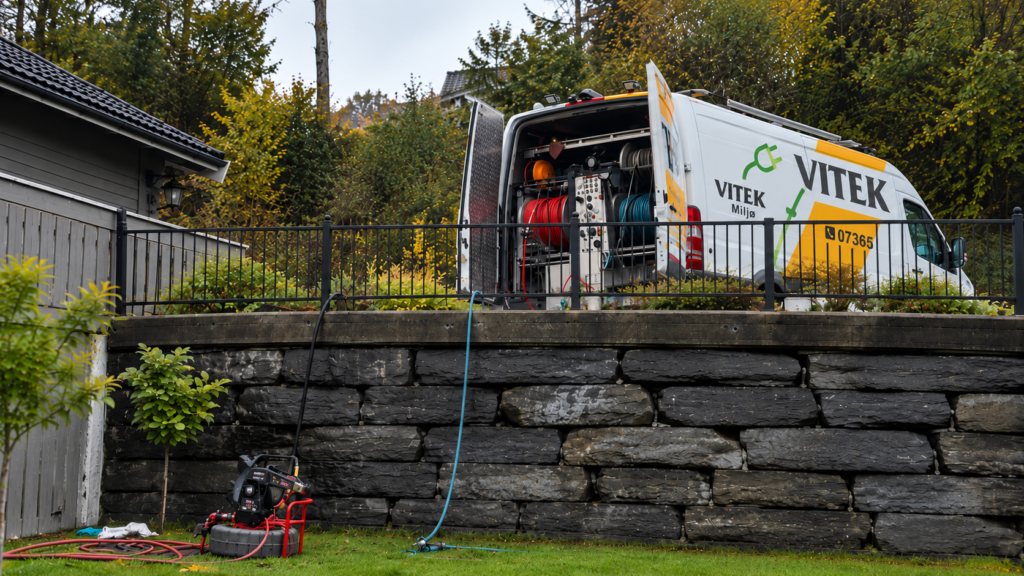
By a professional pipe flushing High-pressure water is used to clean the pipe and remove deposits and blockages.
In some cases, flushing is carried out once a problem has already arisen. In other buildings, it may form part of preventative maintenance, particularly if there is a history of recurring problems.
[Find out more about Vitek’s flushing services →]
4. Recurring problems? Find the cause
If the drain keeps getting blocked in the same place, it might be worth finding out why.
In that case, one can pipe inspection using a camera provide useful information about the condition inside the pipe.
Among other things, the inspection can help to identify issues such as deposits, damage, displacements or other obstructions within the pipeline.
The advantage is that the measure can be tailored to the actual problem, rather than constantly treating the same symptom.
[Read more about pipe inspection →]
5. Housing cooperatives and commercial buildings should think a little differently
The consequences of a blocked drain are more serious when many people or an entire business rely on the same system.
In a housing co-operative, a single incident can affect several residential units. In commercial buildings, institutions and public buildings, a drainage problem can also disrupt day-to-day operations.
It may therefore be particularly valuable to take a preventative approach here.
This could, for example, involve:
- inspection of vulnerable parts of the plant
- periodic pipe flushing
- emptying of drains and sand traps
- Pipe inspection in the event of recurring problems
- follow-up on known problem areas
The frequency with which measures are required will vary from building to building. The age of the pipework, usage, load and previous problems are among the factors that should be taken into account.
The aim is simple: to identify challenges whilst they can still be dealt with in a planned manner – rather than once operations have already come to a halt.
[Read more about Vitek’s services for housing cooperatives and co-ownership associations →]
6. What about frost?
When the cold weather sets in, some water and drainage pipes may also be susceptible to frost – particularly where the pipes are exposed or poorly insulated.
If you have any questions about this, Vitek has a separate article on thawing frozen pipes.
[Read about frozen pipes and defrosting them here →]
When should you contact a professional?
Not all drainage problems require professional help.
However, if:
- the problem keeps cropping up
- several drains are affected at the same time
- water flows back through drains or manholes
- you suspect a blockage further down the pipework
- the drainage system has significantly reduced capacity
…it might be a good idea to have the cause investigated.
Vitek provides water and sewerage services for the private sector, the business sector and the public sector, and can assist with, amongst other things, pipe flushing, pipe inspection, suction, emptying and other pipework services.
A bit of maintenance now can save a lot of work later
It’s easy to forget about the drainage system when everything’s working properly.
But that is precisely why autumn can be a good time to address the small signs you may have noticed throughout the year.
A slow-draining drain doesn’t necessarily mean there’s a major problem. But it could be the first sign that something needs investigating.
Get your drains ready for winter – this will reduce the risk of a minor problem turning into an emergency.
Are you having problems with your water or drainage?
Please contact Vitek for an assessment and appropriate action.
24-hour helpline: 07365