Posts By :

Vitek AS

Do you know the actual condition of your drainpipes?

Do you know the actual condition of your drainpipes? 1559 1169 Vitek AS

Can you hear gurgling, or do you suspect there might be a problem?

We will inspect the main drain in your house, help you locate the external manhole or connection point if you are not aware of where it is, and provide a report on its condition. Please get in touch for a great offer.

Pipe inspection

Let us help you identify any potential errors or omissions before you experience frustrating setbacks, which could prove extensive and costly!

24-hour helpline:

24 hours a day – All year round

CLOGGED PIPES?

CLOGGED PIPES? 1000 667 Vitek AS

Don’t despair – help is just a phone call away.

Blocked pipes can cost you dearly if you venture into uncharted waters.

Blocked pipes can occur at the most inconvenient times and be a major headache for most people. That’s why our emergency helpline (07365) is open 24 hours a day. Our expertise, experience and range of equipment come into their own when we clear blocked pipes efficiently at any time of the day or night.

read more

CAMPAIGN – CLOGGED PIPES!

CAMPAIGN – CLOGGED PIPES! 2560 1440 Vitek AS

We’ll unblock your drain for just 3,790, including VAT!

Has your drain become blocked? Don’t worry – help is at hand! Call 07365!

From 1 September to 31 October, we’re running a special offer on high-pressure jet cleaning for blocked pipes! Take advantage of this great offer by calling 07365 today.
This offer applies to the first two hours of work, including travel time from our head office.
Call-outs outside normal working hours (07:30–15:30) are subject to separate rates.
The offer is aimed at the private market.

We’re open 7 days a week, 365 days a year – get in touch and we’ll come out to help you.

With 40 years’ experience in the industry and the city’s most modern and extensive range of equipment, we deliver quality!

Pipe renewal is a sound investment

Pipe renewal is a sound investment 2560 1440 Vitek AS

Water losses from water mains in Norway stand at an average of 31 per cent, a figure that has remained virtually unchanged over the last 10 years, despite a strong focus on pipe renewal. A report from Norsk Vann shows that pipe renewal pays off.

The report examines what is referred to as a sustainable leakage level and will be available before the summer holidays. It is based on work carried out over the past year by the Swedish consultancy firm Rise in collaboration with the Norwegian firm Powel. At the Nordic Drinking Water Conference in Oslo, researcher Annika Malm from Rise presented some of the conclusions.

The report shows that reducing leaks can lead to cost savings.

Cost-effective with fewer leaks

The project has developed methods and tools for calculating water loss and leakage levels. The method is based on international standards from the IWA, adapted to Norwegian conditions.

The report also shows that reducing water wastage could lead to cost savings for many local authorities across the country.

Water leaks incur actual costs of 350 million for the local authorities

A report by Norsk Vann shows that the cost of approximately 209 million m³ of water leaking away is around NOK 354 million. This is based on an estimated additional annual cost of NOK 273 million for the production and distribution of drinking water, and NOK 81 million per year associated with the transport and treatment of water entering the sewerage network.

Questions about pipe replacement?

Maintenance of pump chambers, sand traps and gutters in housing cooperatives – here’s how to do it

Maintenance of pump chambers, sand traps and gutters in housing cooperatives – here’s how to do it 2560 1702 Vitek AS

Cleaning pump chambers, flushing gutters and emptying sand traps – how does it work, and why is it so important for your housing association?

Sand traps, pump chambers, gutters and downpipes must all be maintained regularly, but how often and who is responsible may vary. As a rule, the board of the housing cooperative or owners’ association is responsible for maintenance, and this includes, amongst other things, ensuring that the sand trap on the property is emptied, the pump chamber is cleaned, and the gutters and downpipes are flushed clear of dirt and debris.

Consequential damage caused by, for example, flooding can quickly become both extensive and costly, so it is wise to ensure regular and proper maintenance. And, not least, if you are to receive any compensation from your insurance in the event of damage, you should take this responsibility seriously.

Here are some tips for those of you responsible for maintenance in housing cooperatives and apartment blocks:

– if you are to receive any compensation from your insurance in the event of a claim, such a responsibility should be taken seriously

Cleaning of pump chambers

Cleaning the pump chamber is important to prevent leaks or blockages in the system. However, as an owner in a co-ownership or housing association, you should also do your bit. You are responsible for maintaining the pipes in your own home – right up to the point where they branch off into a communal pipe.

1.

Do not pour fat down the drain.

It does not disappear, but tends to accumulate in the pump sump and can cause malfunctions, erratic operation and excessive water levels.

2.

Only toilet paper should be flushed down the toilet

Household paper and recycled paper often contain adhesives and can form hard lumps in the drain.

3.

The toilet is intended solely for your personal use, plus toilet paper.

Dental floss, tampons, sanitary towels, nappies, wet wipes, cloths, cotton buds and other foreign objects must never be flushed down the drain, as they can get stuck in the pipes and the pump.

The pump sump is often cleaned as part of routine inspections and servicing, usually twice a year. The work itself is carried out by professionals with their own tanker and sludge suction unit. Just make sure you receive documentation confirming that the work has been carried out correctly.

If you need your pump sump cleaned, please feel free to get in touch for a no-obligation chat. Get in touch with us here! 

Emptying the sand trap

The housing association is responsible for emptying and cleaning the sand trap. If this causes problems such as flooding, damage or environmentally harmful discharges, the owners responsible for the sand trap will be liable for compensation or, in the worst case, face a fine. An important measure to prevent this is to empty the sand trap regularly. Unfortunately, many people forget to include this as part of their maintenance routines.

But what is a sand trap?
A sand trap can, for example, be a drain, a manhole or a grate. You’ll find them everywhere – on streets and roads, in courtyards, in blocks of flats and in car washes at petrol stations – to name but a few.

They perform a useful and necessary task because they filter out dirt, sand, gravel, soil and toxins before surface water – the water that sits on the ground – enters the municipal sewer network. A sewer network which, in many places, is unable to drain large volumes of water quickly enough. We see examples of this time and again during heavy rainfall, particularly in towns and cities, which can lead to surface water flooding. By emptying the sand traps, we can prevent major damage to the surrounding area, the environment, property and the drainage systems.

There are several factors that determine how often a sand trap needs to be cleaned. These include its location on the site, whether a lot of grit has been spread during the winter season, and the volume of traffic passing over the trap.

A rule of thumb, however, is that you should empty the sand trap once it has reached fifty per cent of its maximum storage capacity, so that there is always a little leeway in the event of fluctuations in the amount of sand and gravel, or if delays occur.

Emptying and cleaning a grit trap is a job for qualified professionals with suitable collection equipment. We would be happy to carry out an inspection and, together with you, arrange a schedule for regular cleaning of the grit trap. Get in touch here! 

Cleaning of gutters and downpipes

Gutters and downpipes are sometimes required to drain large volumes of water in a short space of time, so it is absolutely essential that they are free of dirt and debris that could block the waterways. Blocked gutters can lead to unpleasant – and costly – damp and water damage. The cost of cleaning gutters and downpipes is therefore a small price to pay when compared to the bill you’ll face if you neglect this task. In most cases, insurance companies will not cover damage resulting from uncleaned gutters and a lack of maintenance, so it is important to be thorough here.

An annual clear-out, ideally in the autumn once the leaves have really started to fall, is the minimum required to prevent blocked gutters. However, it is a good idea to clean them more often and check them regularly – this usually allows you to spot partially blocked downpipes before they cause any problems. This involves removing leaves, dirt, branches, birds’ nests and moss growth, amongst other things. This should be a natural and routine part of the maintenance work carried out by either the caretaker or other responsible members of the housing association. Clean gutters also reduce the formation of icicles.

Do you have any questions or need help with clearing and cleaning your gutters or downpipes? Please get in touch with us, we’d be happy to help!

Don’t forget the pipes

And by all means: don’t forget the pipes! Many blocks of flats and housing co-operatives still have old water and drainage pipes that are past their prime. It may be worth arranging a pipe inspection every few years, so that any necessary pipe replacement can be planned well in advance and does not become a costly emergency measure.

Questions about pipe inspection?

Pump chamber

If your housing association has installed a pump chamber, this will grind up everything carried in the waste water before it is pumped out into the sewer. Waste water refers to water from, amongst other things, the toilet, shower, washbasin and sink. To ensure the safe operation of the pump, all residents are responsible for ensuring that certain rules are followed:

The cold snap caused a huge rush

The cold snap caused a huge rush 1060 615 Vitek AS

There has been an unusually long cold spell in Western Norway, with several nights in a row below minus ten degrees. This has taken its toll. Over the past week, the phones have been ringing off the hook at water and sewerage companies, which have been inundated with enquiries from desperate homeowners with no water coming from their taps, showers or toilets.

“It’s absolute chaos. I’m sitting in my home office and the phone just won’t stop ringing. We received 200 enquiries this weekend alone,” says Bjørn Guldberg, managing director of Vitek Miljø, when TV 2 calls.  The prolonged cold spell has caused a great deal of frost and ground frost, leading to ice forming in a number of water pipes around the city and elsewhere in Western Norway.

Freezing cold - TV2

Report on the bitter cold, TV2, Vitek

Watch the report on tv2.no

Source: TV2

Emptying and cleaning sand traps, gutters and downpipes – how often does this need to be done?

Emptying and cleaning sand traps, gutters and downpipes – how often does this need to be done? 614 415 Vitek AS

Grit traps, gutters and downpipes must all be cleaned regularly, but how often and who is responsible varies.

Nobody wants any trouble, but if you cut corners when it comes to the important things, that’s exactly what you’ll get. Maintenance and cleaning of sand traps, roof drains and gutters are among the things that can quickly become costly if not taken seriously. That’s why we’ve put together a simple guide to how often the work needs to be done and who’s responsible for ensuring it gets done.


Why do we clean sand traps?

A sand trap is a filtration device for drains, gullies and grates located on roads and streets throughout the country. Its function is to separate dirt and gravel from the water flowing down, which then collects at the bottom of the gully, allowing the water to flow on through the system. It is absolutely essential that the water is allowed to flow freely out of the catch basins. If the outlet becomes blocked, this could lead to surface water flooding and cause significant damage to the surrounding area, the environment, property and pipework.

There are several factors that determine how often a sand trap needs to be cleaned. Among other things, its location on the site, whether a lot of grit has been spread during the winter season, and the volume of traffic passing over the trap are all important points to consider. If you are unsure, VITEK’s expert staff can carry out an inspection and assessment, and work with you to draw up an agreement for regular cleaning of the sand trap.

A rule of thumb is that you should empty the sand trap once it has reached 50 per cent of its maximum storage capacity, so that you always have a little leeway in case there are any variations in the amount of sand and gravel, or if delays occur.

Find out who is responsible

Housing cooperatives and private property owners are responsible for emptying and cleaning sand traps. If a sand trap causes problems in the form of flooding or environmentally harmful discharges, the owners responsible for the sand trap will be liable for compensation or, in the worst case, fined.

Blocked gutters and downpipes can prove costly

Gutters and downpipes are occasionally required to drain large amounts of water in a short space of time, so it is absolutely vital that they are free of dirt and debris that could block the waterways. Blocked gutters can lead to unpleasant – and costly – damp and water damage. The cost of cleaning gutters and downpipes is therefore a small price to pay, compared to the potential bill that could be lurking if you were to neglect this task. In most cases, insurance companies will not cover damage resulting from uncleaned gutters, so it’s important to be extra vigilant here.

An annual clean-out, ideally in the autumn once the leaves have really started to build up in the gutters, is the minimum required to avoid problems with blocked gutters. Remove leaves, dirt, twigs, birds’ nests or any build-up of moss and similar debris.

Cleaning gutters and downpipes should be a natural part of the routine maintenance work carried out by the caretaker or others responsible for operations in housing cooperatives and co-ownerships. If you own a detached house or a semi-detached house (or if there are several of you sharing a house), you should agree in advance who is responsible for cleaning the gutters. If a gutter has become blocked on your «neighbour’s side», but you share the guttering system, this can have major consequences for you as well.

Do you have any further questions about emptying and cleaning sand traps, gutters or downpipes? Please get in touch with us at VITEK, we’d be happy to help!

WHAT TO DO IF YOU SUSPECT A LEAK OR BLOCKED PIPES

WHAT TO DO IF YOU SUSPECT A LEAK OR BLOCKED PIPES 2560 1861 Vitek AS

Has your sink started to gurgle, or is there a bit too much water on the floor when you have a shower? If so, you may have a leak or blocked pipes. We’ll give you some tips on what to do in both cases.

Damage to pipes can be costly to repair, both in terms of time and money. That is why checking the condition of your pipes is one of the most important things you can do as the owner of a home or a building with its own pipework. Here, we provide an introduction to how you can identify any problems as early as possible, and what you need to do to resolve them.

SIGNS OF PROBLEMS WITH THE PIPES

There are several things you can look out for that reveal the true condition of the pipes behind walls, under floors or in ceilings. Ideally, you’d have an Aquastop (a sensor that alerts you with a beep and a light when a leak is detected – commonly used under the kitchen sink) installed everywhere and along all pipes, but we don’t quite have that technology yet. For the time being, we have to detect the problems by the old-fashioned way by seeing, listening, feeling and smelling.

In some cases, the local authority will contact you to inform you that a leak or blockage has been detected in your pipes connected to the municipal mains network, and you will be required to rectify the problem. In other cases, you will need to detect leaks or unblock pipes yourself.

CLOGGED PIPES

If a pipe has become blocked, you’ll usually realise this when you notice something different from the norm. For example, does the water start to drain abnormally slowly down the drain when you’re having a shower or washing your hands? Has there been an unusual or unpleasant smell in the house for no obvious reason? Are there gurgling noises coming from the traps? If so, it’s important to check the condition of the pipes; hopefully, this will help you avoid a potentially devastating flood.

Read more: How to unblock pipes

The best thing you can do if you suspect your pipes are blocked is to contact professionals. Plumbo and other drain unblockers can, in the worst case, do more harm than good if they are not used correctly or at the wrong time. Let the professionals assess whether a drain unblocker will suffice, or whether it is necessary to flush the pipes in a gentle and effective manner.

LEAK

Leaks in the pipes in your own home are often detected when you hear a constant hissing sound even though none of your water pipes are in use. In other words, the pipes should be quiet when they are not in use. You may also suddenly notice water coming up from the floor or the ground, or water dripping from the ceiling and damp on the walls.

If you suspect you have a leak, the first thing you must do is locate the main valve and turn off the water supply. Also take photographs of any water damage, as your insurance company will usually ask for these. Try to prevent further water damage by removing moisture wherever possible. It will then be up to your insurance company to arrange for assistance to repair any damage that may have been caused by the leak.

To prevent further leaks, it may be It’s worth considering pipe replacement. If there has been a leak even once, this suggests that the condition of the pipes could be better and that, unfortunately, the likelihood of further leaks is quite high.

GET PROFESSIONAL HELP

VITEK offers expert advice whether you’re having problems with blocked pipes or need to replace existing pipes. Please feel free to contact us for a friendly chat, whether it’s about preventing injury or getting help once an accident has already happened.

HAVE YOU CHECKED THE WATER TRAP RECENTLY?

HAVE YOU CHECKED THE WATER TRAP RECENTLY? 997 641 Vitek AS

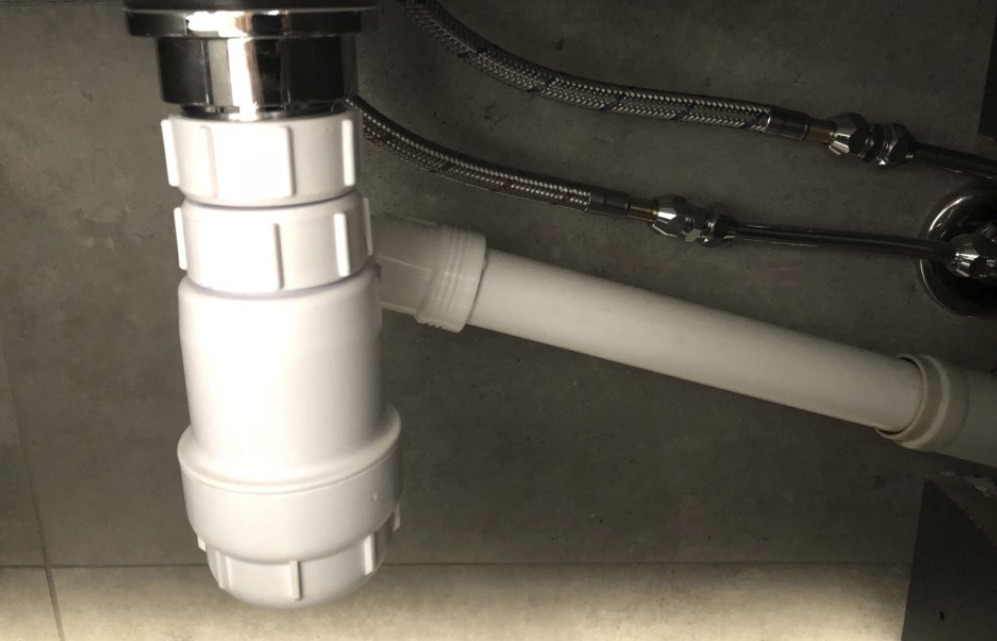
All homes have water traps. They are located under the washbasin in the bathroom or the sink in the kitchen. They are in the floor drain, the shower cubicle and the toilet. When was the last time you checked your water traps?

A water trap is an absolutely essential part of a home’s pipework. This little device prevents water from draining away, and is extremely important as there are sections of the drainpipe that must always be filled with water. This creates a barrier between the drainage system and the rest of the room. Without the water in the trap, foul odours and unpleasant gases would fill the rooms we use every day – something everyone naturally wants to avoid.

The vast majority of water traps are S-, U-, Q- or J-shaped, but more modern types may also come in other shapes. Water traps are easy to locate and see under washbasins, whilst those in the floor or toilet are usually completely concealed.

WHAT HAPPENS IF THE WATER LOCK DOESN’T WORK PROPERLY?

If the water trap is not working properly, you may experience odour problems or blocked pipes. This can be a major nuisance for those living in the home and make it difficult to spend time in certain rooms.

You often realise quite quickly if the water in the bathroom or kitchen sink isn’t draining properly, but in some cases you don’t notice this straight away. For example, we might run the tap in the kitchen sink to rinse vegetables or soak pots and pans. The next moment, we get distracted by a phone call, the children shouting or someone knocking at the front door. If the water isn’t draining properly down the drain, it can quickly overflow. This can lead to large amounts of water on the kitchen worktop and floor, and in some cases even minor water damage.

WHY DO PROBLEMS WITH THE WATER TRAP OCCUR?

Problems with the trap can occur quite frequently. It is very common for the trap to become blocked, which in turn leads to blocked pipes. This is because hair, grease, food scraps and other debris can clump together in the trap. Sometimes, the gasket that is supposed to sit around the «cup» before the trap is screwed into place is not fitted properly. It is important that it fits securely. If it is loose, this can lead to water leaks.

If you have a room that is rarely used, it may also be the case that the water in the trap has simply evaporated over time. This is particularly common in holiday home bathrooms and kitchens, which are only used at weekends or during holidays. This naturally means that the barrier between the drainage system and the rest of the room disappears, which will become apparent through a foul odour.

HOW TO EASILY MAINTAIN YOUR WATER TRAP

It is relatively easy to maintain a water trap, and you usually only need to do so a couple of times a year. Everyone should also be able to clean their water traps manually, rather than always relying on strong chemicals – which many people use incorrectly and end up causing more harm than good.

The very first thing you need to do is unscrew the water trap, which is located directly under the sink, by loosening the large nuts or bolts that hold the parts together. It’s a good idea to place a bucket under the sink so that you have something to catch any water or other items that might fall out.

Next, dismantle the system and clean the parts individually. Remove any hair or food residues, and wash the parts with warm water and a mild detergent. Scrub the inside of the pipes thoroughly with a brush to remove all deposits.

If it’s difficult to reach inside the drain trap, you can use a thick piece of steel wire. Bend it and use it to dislodge any blockages caused by hair, grease and dirt.

Finally, simply check all the parts you have cleaned. If any of them are damaged, they should be replaced. Then screw everything back into place in the correct order. Remember to make sure the gasket is fitted securely.

If you have a water trap with a foot valve, it will often be fitted with a bottom plug. This can be removed so that you do not have to dismantle the entire pipework to clean the water trap. If there is no bottom plug, you can clean it as best you can through the sink drain.

HAD A MIX-UP?

It’s all well and good to be able to maintain your trap yourself, but in some cases, cleaning the trap won’t solve problems with blocked pipes or unpleasant odours. In such cases, it may be wise to contact professionals who can resolve the situation quickly and effectively. VITEK has extensive experience with all types of pipework in a variety of homes and properties. You can contact us for a no-obligation site visit and a quote if you’re having trouble with your pipes. We guarantee that the work will be carried out to the highest standard, so that your daily life can return to being stress-free.

HAS THE ACCIDENT ALREADY HAPPENED? HERE’S HOW YOU CAN FIX THE PIPES YOURSELF

HAS THE ACCIDENT ALREADY HAPPENED? HERE’S HOW YOU CAN FIX THE PIPES YOURSELF 2000 1000 Vitek AS

All sorts of things can happen to the pipes in your home. Whether it’s a water leak or blocked pipes, there are, fortunately, some simple tricks that can sort the problem out. Learn how to fix your pipes yourself.

Whether you live in a detached house, a terraced house or a flat, the vast majority of people will experience various plumbing problems. Some will need to call in professional help, but there are also many situations where you can fix the pipes yourself. In this country, it is usually blocked pipes that cause problems in the bathroom or kitchen. At other times, the pipes have sprung a leak for one reason or another. In such cases, there are simple first-aid measures you can take to get the pipes working properly again.

BLOCKED PIPES? HERE'S HOW TO GET THE WATER FLOWING FREELY AGAIN

Blocked pipes are one of the most common plumbing problems people experience. The sink, bath, toilet or shower can all be affected by blocked pipes and water that won’t drain away. It often doesn’t take much to sort out the problem, but what many people forget is to start gently. If you want to get the water flowing freely again, you should proceed carefully so as not to cause more harm than good.

Start by seeing if you can pull any hair, food scraps or other debris out of the drain. After that, the simplest solution is often the best. A suction cup or a plunger and a bit of warm water have cleared out many a blocked pipe, and are usually the only remedy needed.

If manual force doesn’t work, there are many chemicals that promise to clear blockages in pipes. It is incredibly important to read the package leaflet carefully so as not to damage your pipes. Some people have experienced chemical burns to their pipes, and if you’re not careful, others have also suffered burns to their own skin. You should therefore take the utmost care to follow the instructions and protect your skin from the chemicals.

A PIPE LEAK? HERE'S WHAT YOU SHOULD DO

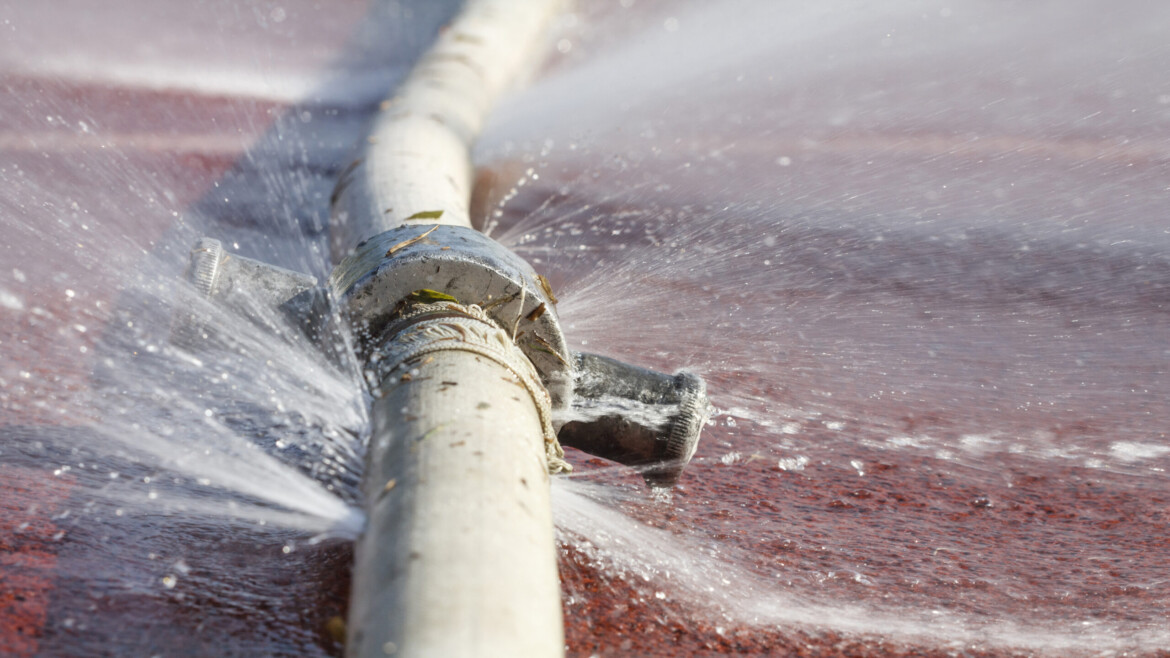
If there is water pooling on the bathroom floor or you hear an annoying dripping sound under the kitchen sink, you most likely have a leak in a pipe. The very first thing you should do is turn off the main tap so that too much water doesn’t flow out of the pipe. Water damage is not uncommon with leaks, and if you do not stop the problem in time, the damage could prove costly. Also remember to take photos of the leak if possible, so that you have evidence to show should this become an insurance claim. Once you’ve taken the photos, you should start removing water and damp to prevent the damage from getting worse. You should also move any belongings that might be affected by the leak.

Water leaks often originate from loose water traps, for example under the kitchen worktop or at other drains. Tightening water traps is therefore a good idea, and can also be a simple solution to the problem. At other times, blocked pipes can lead to minor flooding, in which case the problem will naturally disappear once you’ve cleared the blockage.

Pipe leaks can also be more difficult to deal with. Sometimes they are caused by age and wear and tear, other times by unskilled labour or simply because the wrong pipes have been fitted in the property. Manufacturing defects in pipes can also occur, and may eventually lead to leaks. In these cases, professional help will be required. Whilst you wait, you can try to tape up any leaks if the situation is urgent, but a plumber will often be able to come out relatively quickly.

BETTER SAFE THAN SORRY

It’s always a good idea to know the basics of plumbing first aid for the pipes in your home, but preventative measures are still the wisest course of action. Preventing blocked pipes, carrying out regular pipe inspections and carrying out work on the pipes when the need arises.

If the problem proves too serious or complicated for basic first aid, it is also important to contact professionals who can help. VITEK has been working with pipework for many years and has extensive experience with all types of homes and properties. We can assist you if you need help getting your pipes back in working order. Contact us for a no-obligation site visit and a quote, and we guarantee that the work will be carried out properly.